




“Gartner predicts that through 2024, organizations that adopt active metadata capabilities can decrease the time-to-delivery of new data assets to users by as much as 70%.”
In today’s fast-paced and data-centric business landscape, organizations are generating and accumulating vast amounts of data at an unprecedented rate. This data holds valuable insights that can drive informed decision-making and fuel innovation. Although, the sheer volume and variety of data can also pose significant challenges, making it essential for companies to effectively manage their data assets. Metadata, the data about data, is essential for understanding, organizing, and extracting value from datasets. However, traditional passive metadata practices have become inadequate in coping with the complexity and scale of modern data environments. Enter active metadata management, a revolutionary approach that promises to address these challenges and unlock the full potential of data assets.
Passive metadata practices suffer from several limitations in today’s data-rich ecosystem. One of the key problems is the lack of real-time updates and synchronization with data sources. As data constantly changes and evolves, passive metadata quickly becomes outdated, leading to inaccurate insights and poor decision-making. Additionally, passive metadata often remains siloed and fragmented, making integrating and understanding the relationships between various datasets challenging.
Active metadata practices offer a solution to these issues by providing a dynamic and interconnected metadata ecosystem. Active metadata enables seamless and rapid metadata flow throughout the whole data stack, integrating rich context and data into each data stack tool. In addition to the basic technical metadata active metadata management provides business (semantics enrichment, business tags) operational (infrastructure performance metadata), and social (user-generated information) metadata.
By effectively activating the metadata, organizations can enhance seamless data orchestration, improve data quality and observability, increase data utilization, streamline data governance, maximize the value of data assets, and enable a data-driven culture. When data and analytics solutions use active metadata, the positive impacts on automation, insight discovery, and prescriptive recommendations to optimize data usage drive additional demand for even more utilization of active metadata. The enhanced demand encourages data and analytics leaders to focus on metadata capabilities when selecting new vendors or technologies. It also pushes them to seek more interoperability among their ecosystems to share and exchange metadata.
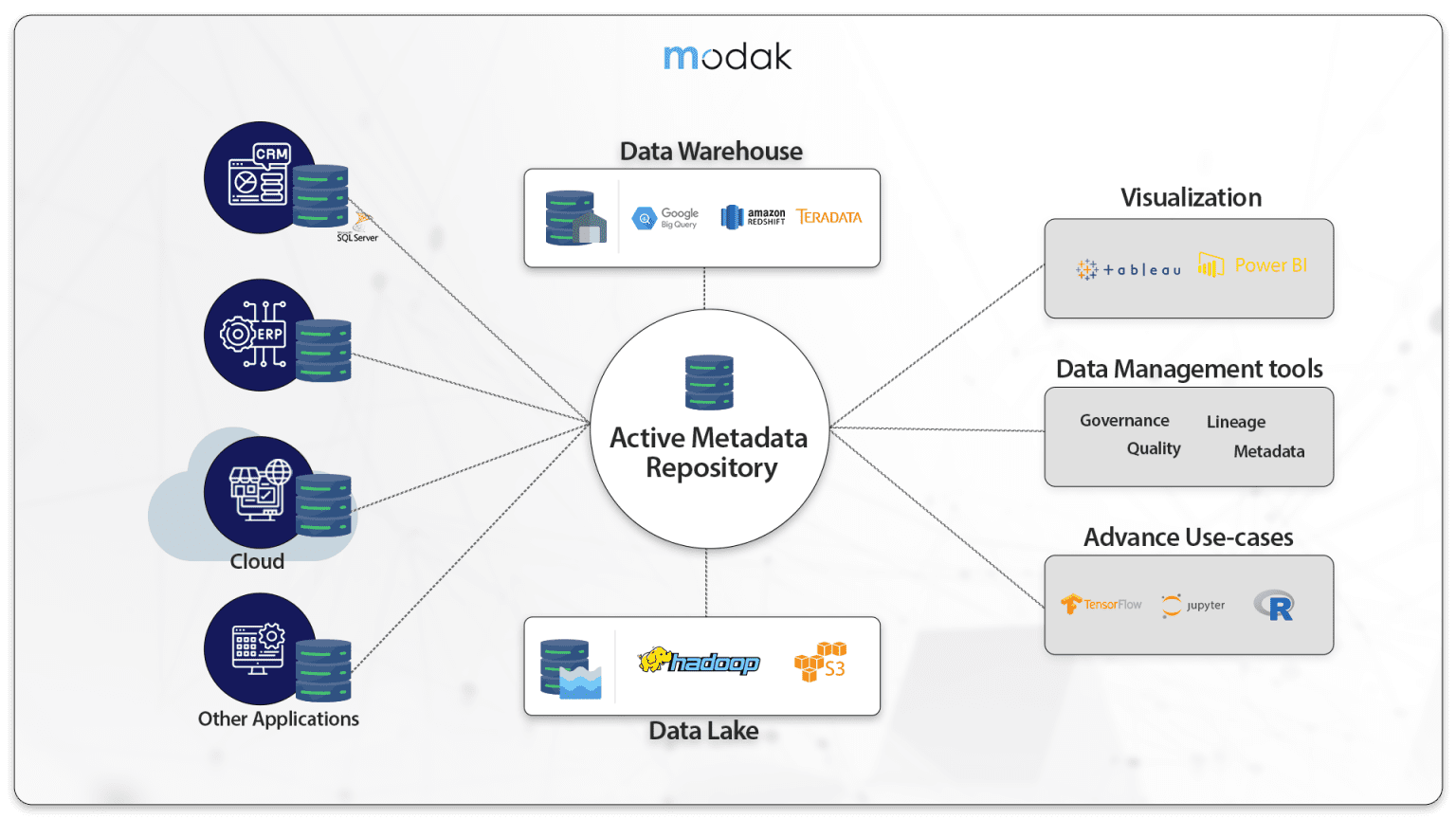
Why Active Metadata Management Matters?
- Data Discoverability and Governance: Active Metadata Management enhances data discoverability by providing accurate and up-to-date information about datasets. It acts as a data catalog that enables users to find relevant data quickly and understand its lineage, quality, and usage restrictions. Additionally, it ensures data governance by enforcing data policies, privacy regulations, and access controls.
- Data Integration and Interoperability: In a data-driven organization, data is spread across various systems and platforms. Active Metadata Management facilitates data integration by providing insights into data structure, formats, and transformation rules. It allows data to flow seamlessly across different systems, enabling better data interoperability.
- Data Quality and Trust: Maintaining data quality is crucial for making reliable business decisions. Active Metadata Management ensures that data quality rules and checks are applied consistently across the data ecosystem. This, in turn, builds trust in the data, empowering stakeholders to make data-driven choices with confidence.
- Impact Analysis and Data Lineage: In a rapidly evolving data landscape, it’s essential to understand how changes in one dataset can affect others. Active Metadata Management allows organizations to perform impact analysis, identifying potential consequences of data changes. Furthermore, it provides comprehensive data lineage, showing the origin and transformation history of data, increasing data transparency.
- Data Collaboration and Knowledge Sharing: Active Metadata Management fosters collaboration among data users and stakeholders. It enables them to contribute their knowledge and insights about datasets, enriching the metadata with valuable context. This collaborative approach facilitates knowledge sharing and promotes a data-driven culture within the organization.
Active Metadata Management is a critical component of data-driven organizations’ successful data management strategy. By actively capturing and maintaining metadata throughout the data lifecycle, organizations can improve data discoverability, integration, quality, and governance. This, in turn, enables better decision-making, fosters innovation, and enhances the overall value derived from data assets. In an era where data is a strategic asset, organizations that embrace Active Metadata Management will gain a competitive edge, unlocking the full potential of their data resources and driving success in the data-driven world.